Changing the way we change the world

A dynamic collection of people I’m following, organizations I’m learning from, and things I’m listening to, reading, and watching.

Organizations

Some groups who are thinking differently.
Disrupt Development is catalyzing the movement of disruptors to reimagine global development systems to become equitable and sustainable.
Stopping as Success‘s goal is to equip international organizations to transition responsibly to make way for local leadership in the development sector.
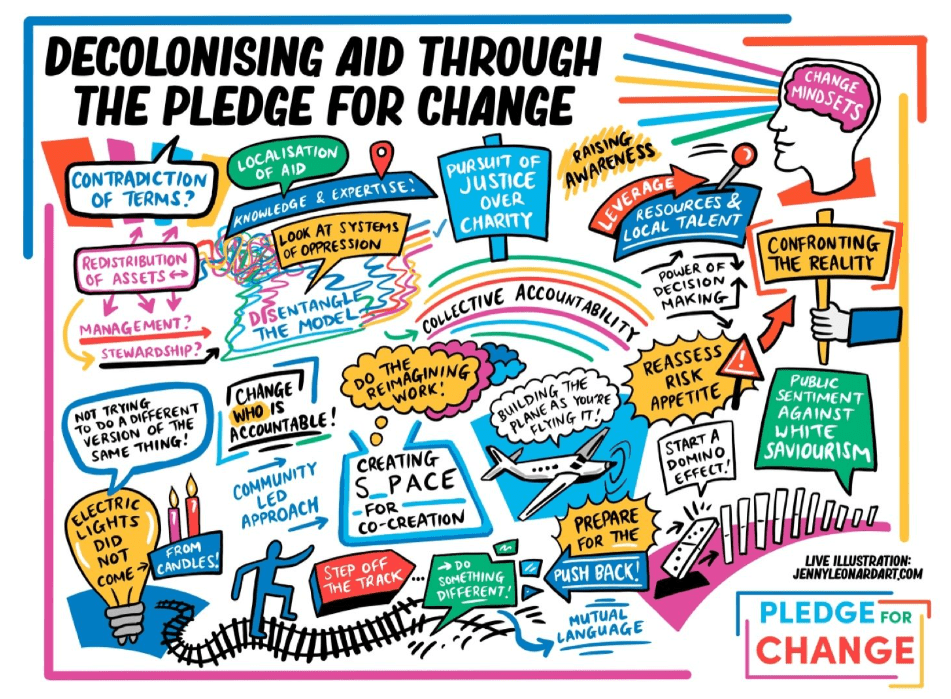
The Pledge for Change 2030 re-imagines the role of INGOs in the global humanitarian and development aid system.


Podcasts

Trust-Based Philanthropy. Corey Oser & Effie Ansah Interviewed The Power Shift: Decolonising Development

In our latest episode we delve into the transformative power of grassroots organisations and the crucial role of trust-based philanthropy in fostering meaningful change. We interviewed Corey Oser, Vice President of Programs at the Global Fund for Children and Effie Ansah from Little Fish Theatre, who share their insights and experiences in navigating the complexities of funding and community engagement. Corey begins by outlining the mission of the Global Fund for Children, which focuses on empowering child and youth-centered organisations through flexible and unrestricted funding. This innovative approach allows organisations to allocate resources based on their unique needs and priorities, ultimately fostering a sense of autonomy and trust. Corey emphasizes that flexibility is not merely a luxury but a necessity for smaller, grassroots organisations, particularly those led by women and youth. Effie Ansah, a facilitator at Little Fish Theatre, adds depth to the conversation by sharing her experiences working directly with young people in various settings. She highlights the importance of arts-based opportunities in engaging youth and facilitating honest conversations about societal issues. Effie's work exemplifies how creativity can serve as a catalyst for personal and professional growth, enabling young individuals to explore their identities and express themselves authentically. Throughout the episode, the discussion touches on the findings of a recent impact study conducted by the Global Fund for Children. This research underscores the significance of trust-based relationships between funders and grassroots organisations. The study reveals that when organisations feel trusted and valued, they are more likely to take bold steps and innovate in their approaches to community engagement. Corey and Effie both talk about the challenges and limitations faced by grassroots organisations, particularly in securing funding that aligns with their missions. They advocate for a shift in the philanthropic landscape towards more inclusive and participatory grant-making practices, where the voices of those directly affected by funding decisions are prioritizedCorey OserCorey Oser leads Global Fund for Children’s engagement with child and youth-centered organisations globally as Vice President of Programs. Her interest in strengthening community wellbeing and human rights at the grassroots level stems from working with community-based and international organisations on issues such as supporting women affected by conflict and war and preventing human trafficking.  She is a practitioner of transformative organisational change and creative facilitation and seeks to shift power dynamics in philanthropy and global development. She is the host of the Roots and Sparks podcast, a platform for global changemakers to tell their stories. Corey is a graduate with highest honors from Bates College and holds an MA in International Affairs from George Washington University. She serves as Co-Chair of the Wellbeing Project’s Funders and Wellbeing Learning Group.Effie AnsahEffie Ansah, Little Fish Theatre facilitator and GIS Report Researcher Effie is an actor, writer, and creative freelancer working broadly across theatre. With a background in youth and community work, she is passionate about bringing arts-based opportunities to communities that often face barriers to accessing the arts. She believes that creativity is a key to unlocking progressive growth in both personal and professional development and brings this perspective into spaces ranging from corporate environments to educational settings. Effie has worked for over four years with Little Fish Theatre as a facilitation practitioner.If you’re interested to find out more about Corey Oser & Effie Ansah work, take a look here:Corey OserWeb
  1. Trust-Based Philanthropy. Corey Oser & Effie Ansah Interviewed
  2. Empowering Local Voices in Global Development. Niharika Srivastava Interviewed
  3. The power of community engagement in co-creating durable solution. Florence Ringe Interviewed
  4. Unpacking how identity manifests in racialised bodies through feminist approaches. Kenza Ben Azouz interviewed.
  5. Community-centred approach to humanitarian work. Rachel Kiddell-Monroe interviewed.

My favorite videos

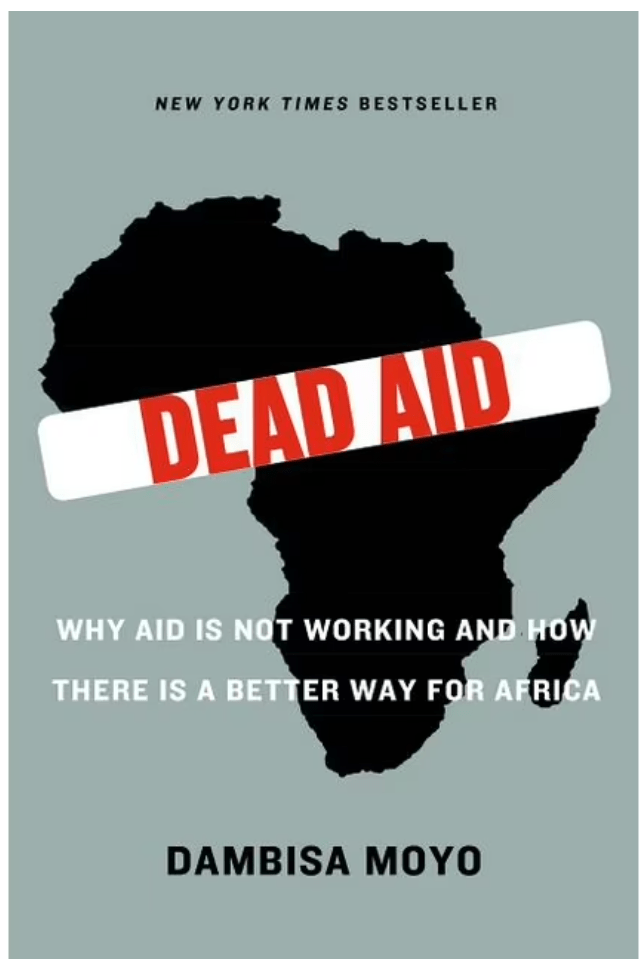
If you look back over the past 60 years where Africa has received over $1 trillion of aid, on two metrics of growth and poverty, have things improved? “The answer is a resounding no.”

“You never asked.” When most well-intentioned aid workers hear of a problem they think they can fix, they go to work. This, Ernesto Sirolli suggests, is naïve. In this funny and impassioned talk, he proposes that the first step is to listen to the people you’re trying to help, and tap into their own entrepreneurial spirit. His advice on what works will help any entrepreneur.

Imagine if every person in Africa saw the “Africa for Norway” video and this was the only information they ever got about Norway. What would they think about Norway? If we say Africa, what do you think about? Hunger, poverty, crime or AIDS? No wonder, because in fundraising campaigns and media that’s mainly what you hear about. We need to educate ourselves on the complex issues and get more focus on how western countries have a negative impact on Africa’s development. If we want to address the problems the world is facing we need to do it based on knowledge and respect.


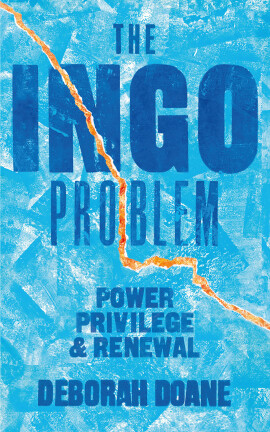
Books to open your eyes
Thought -provoking articles
Exit Strategies

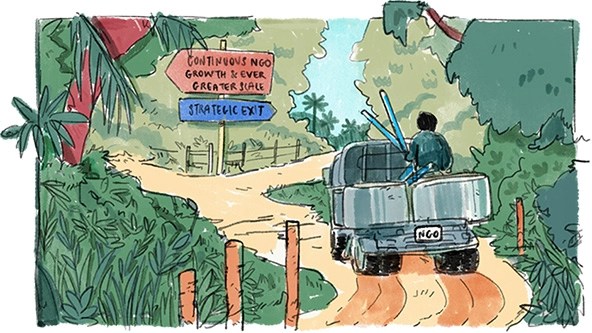
It might be a cliché, but it’s rare for international NGOs to “work themselves out of a job.” Doing so requires planning from the start, communicating clearly, setting hard deadlines, and going unconditionally. Read more.